Full stack development remains one of the most in-demand skill sets in tech, and for good reason: it gives you the flexibility to work on both the user-facing side of a product and the systems running behind it.
Start with the fundamentals
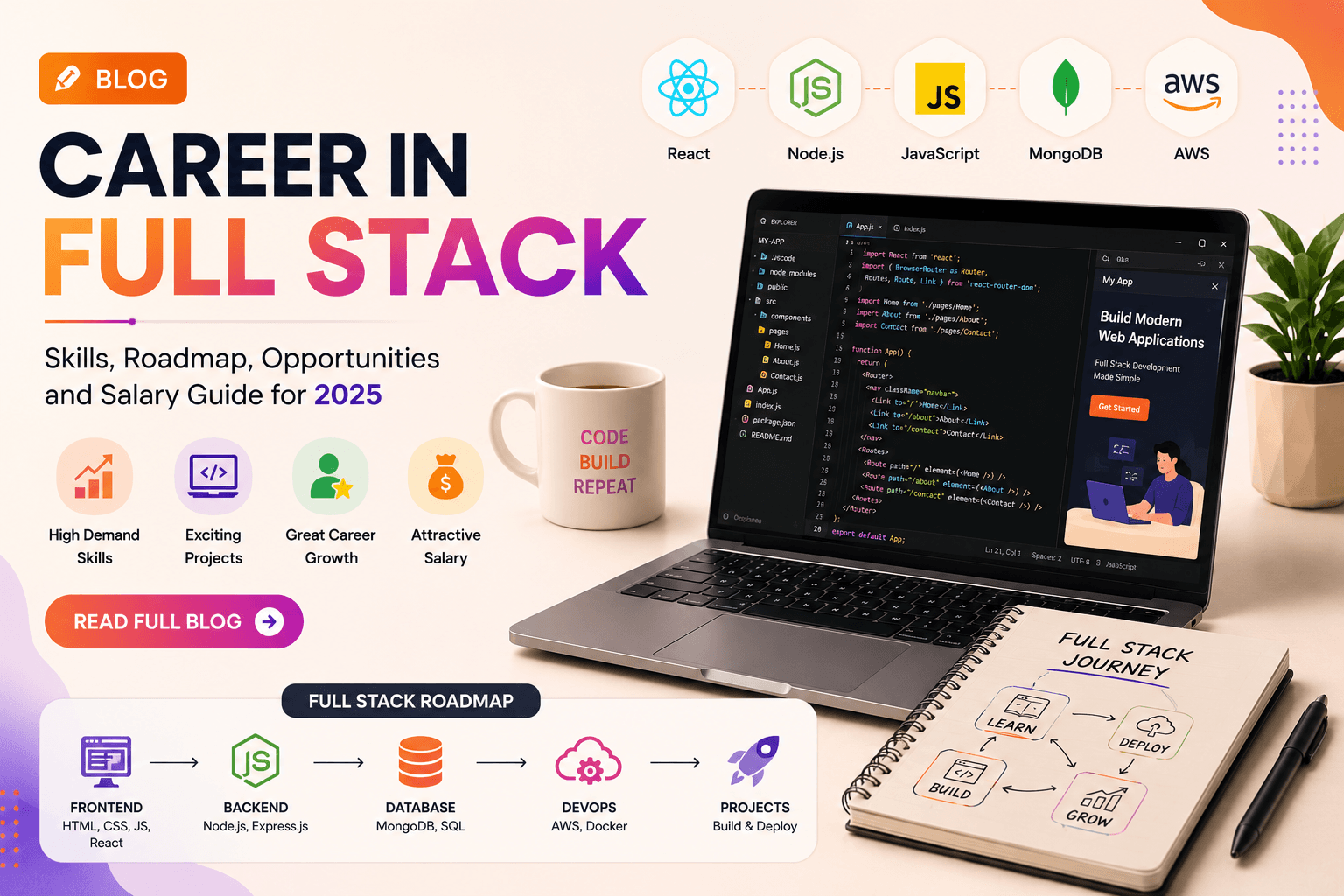
Before jumping into frameworks, get comfortable with HTML, CSS, and JavaScript. These three form the foundation of everything you'll build on the frontend. Resist the urge to skip ahead to React just because it's popular — a shaky foundation shows up later in ways that are hard to debug.
Learn one frontend framework deeply
React continues to dominate hiring demand in the Indian job market. Rather than learning multiple frameworks shallowly, go deep on one. Understand component lifecycles, state management, and how to structure a mid-sized application before moving on.
Don't neglect the backend
A "full stack" developer who only knows frontend isn't full stack. Learn Node.js and Express to build REST APIs, understand how authentication works, and get comfortable with at least one database — MongoDB or PostgreSQL are both excellent starting points.
Build real projects, not tutorials
Tutorial projects are useful for learning syntax, but they rarely impress recruiters. Pick a problem you actually care about and build it end to end: a booking system, a content platform, a small SaaS tool. Deploy it. Put it on your resume with a live link.
Prepare for interviews deliberately
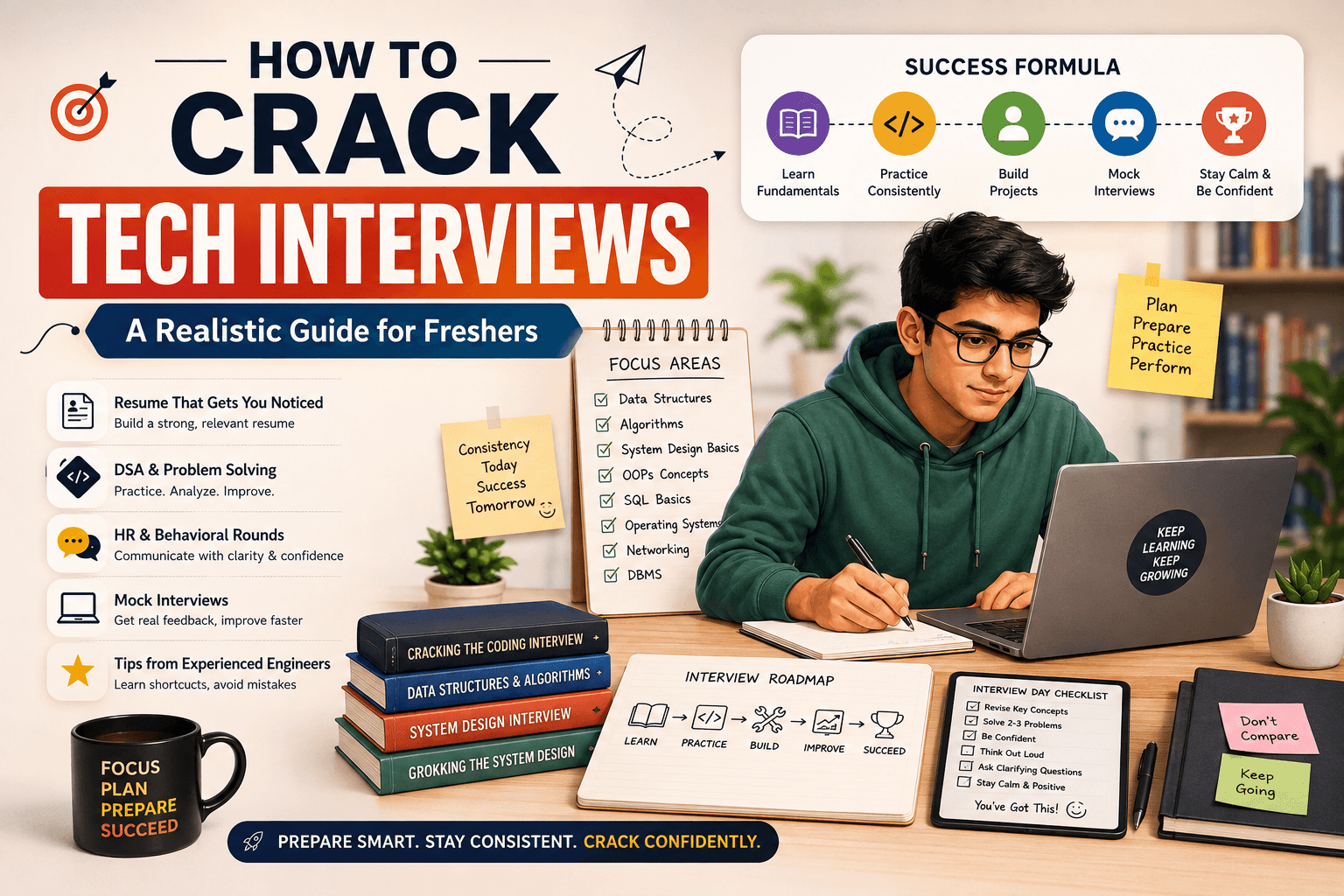
Technical interviews test more than syntax — they test how you think. Practice explaining your projects clearly, be ready to discuss trade-offs you made, and brush up on basic data structures and algorithms even if your day-to-day work won't use them directly.
The path to becoming job-ready typically takes 4-6 months of focused, structured learning. Consistency matters more than intensity — a steady daily practice beats sporadic long study sessions.