
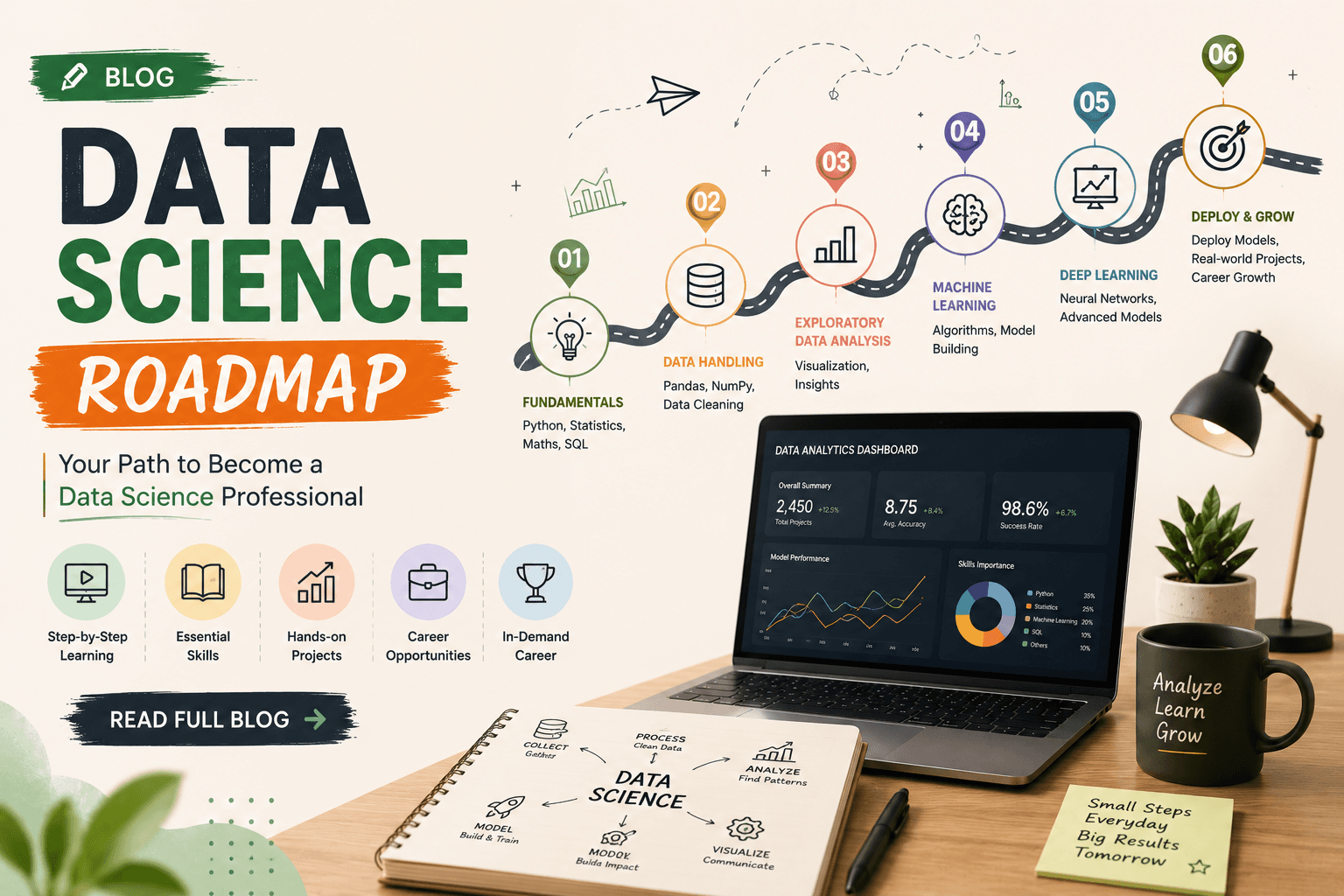
Data science can feel overwhelming because it sits at the intersection of statistics, programming, and business context. Breaking it into a clear sequence makes it manageable.
Step 1: Statistics fundamentals
Before touching any machine learning library, build a working understanding of descriptive statistics, probability, and hypothesis testing. These concepts explain why models behave the way they do — skipping them leads to using tools without understanding them.
Step 2: Python and data manipulation
Pandas and NumPy are the workhorses of practical data science in Python. Spend real time cleaning messy, real-world datasets — this is where most actual data science time goes, far more than model building.
Step 3: Data visualization
Being able to clearly visualize and communicate findings is as important as the analysis itself. Learn Matplotlib, Seaborn, and at least one BI tool like Power BI or Tableau.
Step 4: Machine learning fundamentals
Start with supervised learning — regression and classification — before moving to unsupervised techniques. Understand the math behind core algorithms at a conceptual level, even if libraries handle the implementation.
Step 5: A focus area
Once you have the fundamentals, pick a direction: NLP, computer vision, or classical ML for business analytics. Going deep in one area produces better outcomes than staying broad and shallow.
Realistically, building genuine competence takes 6-9 months of consistent, project-based learning. Building 3-4 strong portfolio projects matters far more than collecting certificates.