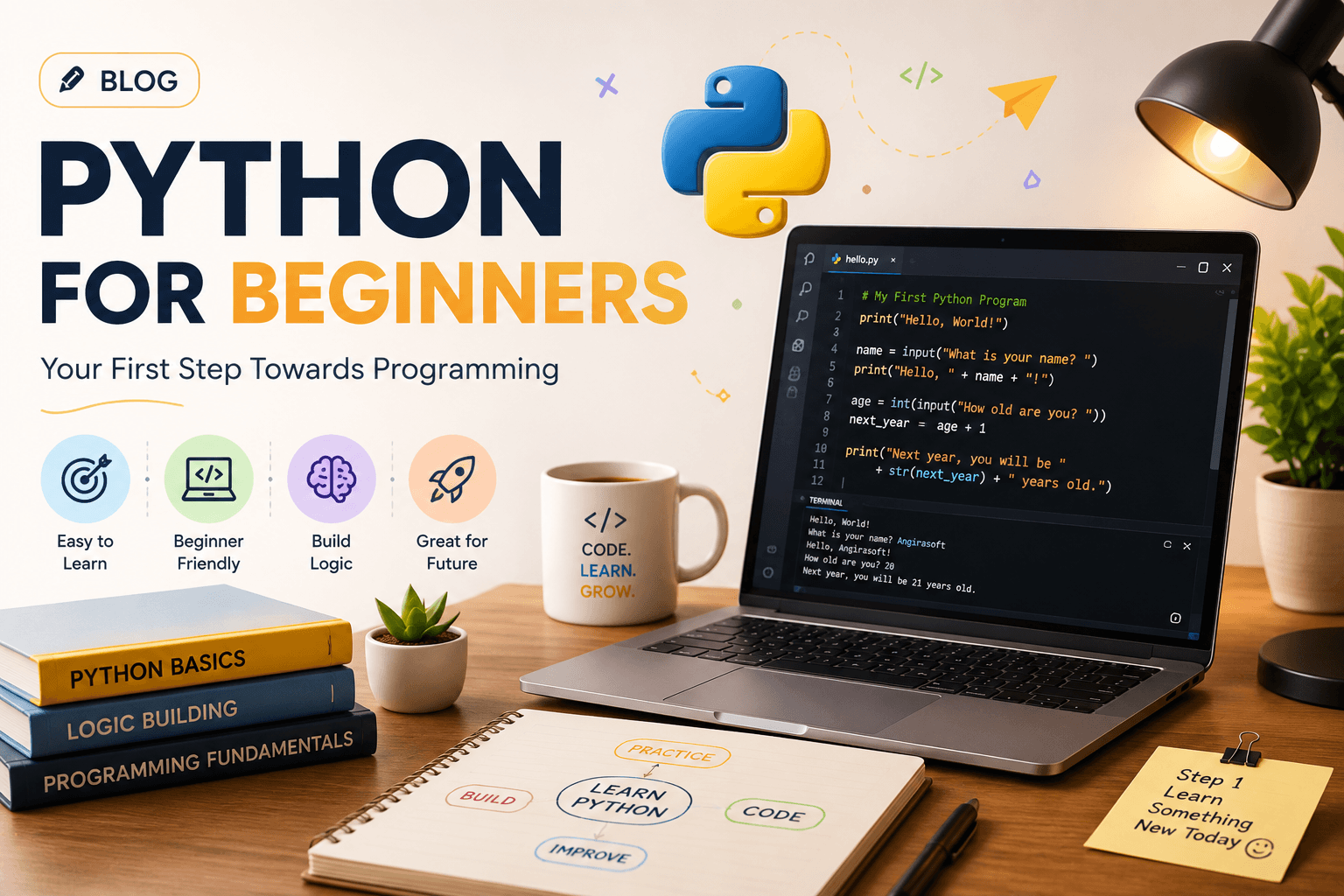
Python's reputation as a beginner-friendly language is well earned — clean syntax, a massive community, and applications across web development, data science, and automation make it a smart first language for most learners.
Focus on core syntax before tools
Many beginners jump straight into libraries like Pandas or frameworks like Django before understanding loops, functions, and basic object-oriented concepts properly. Spend real time on the fundamentals — it pays off everywhere else.
Practice with small, real problems
Rather than passively watching tutorials, write code daily. Automate something tedious in your own life: rename a batch of files, scrape a public webpage for data, build a simple budget tracker. Real problems force real learning.
Pick a direction once you're comfortable
Once you understand the basics, Python branches in several useful directions: web development with Django or Flask, data analysis with Pandas, or automation and scripting. Choose based on what excites you rather than what's trending — sustained interest matters more than chasing demand.
Read other people's code
Once you're past the basics, reading open-source Python projects on GitHub teaches you patterns and idioms you won't find in beginner tutorials. Start with smaller, well-documented projects before tackling large codebases.
Python rewards patience. The learning curve is gentle at first and gets more interesting the deeper you go — which is exactly why it remains a strong first language for serious careers in tech.