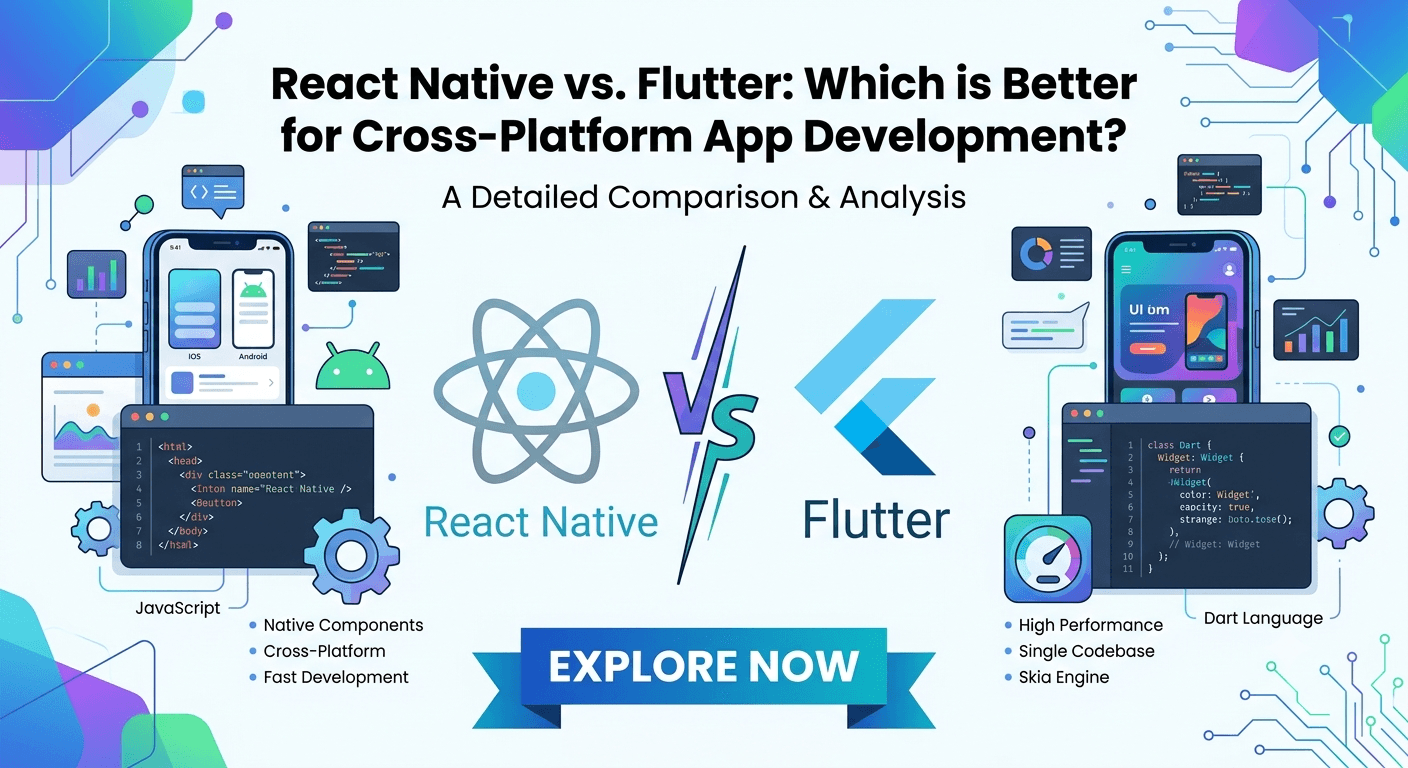
Cross-platform mobile development has matured significantly, and React Native and Flutter are the two dominant choices. Both let you build for iOS and Android from a single codebase, but the right choice depends on your background and goals.
If you already know JavaScript
React Native uses JavaScript and React's component model, which means web developers can transfer a large portion of their existing knowledge. If you're already comfortable with React for the web, React Native has a noticeably shorter learning curve.
If you're starting fresh
Flutter uses Dart, a language designed specifically for UI development. Some learners find Flutter's widget-based approach more consistent across platforms, since it doesn't rely on native components the way React Native does.
Job market considerations
In the Indian job market, React Native currently has a wider base of job postings, particularly among startups and product companies already using React on the web. Flutter has strong adoption in specific company clusters, but the overall volume of openings tends to favor React Native as of now — though this shifts over time.
Performance and native feel
Both frameworks have closed most of the performance gap with fully native apps for typical business applications. For most apps — e-commerce, content, social — either framework performs well. Performance-critical apps (heavy animation, gaming) may still favor native development entirely.
Our recommendation: if you already know JavaScript and React, start with React Native — you'll be productive faster. If you're starting from zero with no strong existing language preference, either is a reasonable choice, and Flutter's tooling is excellent for newcomers.